The name
Everyone you love, in one place, facing the same direction.
Perseid is named after a meteor shower. Here is why that seemed like the right name for something that sends wedding invitations.

Every August, Earth crosses the trail of a comet that came this way a thousand years ago. For a few nights the dust it left behind burns up in our atmosphere, and the sky fills with light.
They’re called the Perseids because they appear to come from the constellation Perseus. Beside Perseus, fixed in the same patch of sky, is Andromeda. The two of them were put there together — in the oldest version of the story, so they’d never be apart.
But the part we keep coming back to is smaller than the myth.
Every grain of that dust has been travelling for centuries. It arrives once, brightly, and it’s gone. People know this. So they drive out past the streetlights, and they bring blankets, and they lie down in the dark and wait — together, looking up at the same thing.
That’s what an invitation does. It goes out a long way ahead of the night itself, so that when the night comes, everyone you love is in one place, facing the same direction.
We named the company after the part where they all show up.
The shower itself
Three warm nights in August.
- 11–13 August
- When it peaks, every year, reliably.
- 50 to 100 an hour
- At the peak, under a dark sky. Not a rare glimpse — a steady one.
- Warm enough to stay out
- Which is the real reason it is the one people actually go and watch.
Most meteor showers ask you to stand in a field in January. The Perseids arrive in the middle of summer, on nights warm enough that lying on your back for an hour is a pleasant thing to do rather than an endurance test. That is why it is the shower people plan around, drive out for, and bring somebody to.
It is also, not coincidentally, the middle of wedding season.
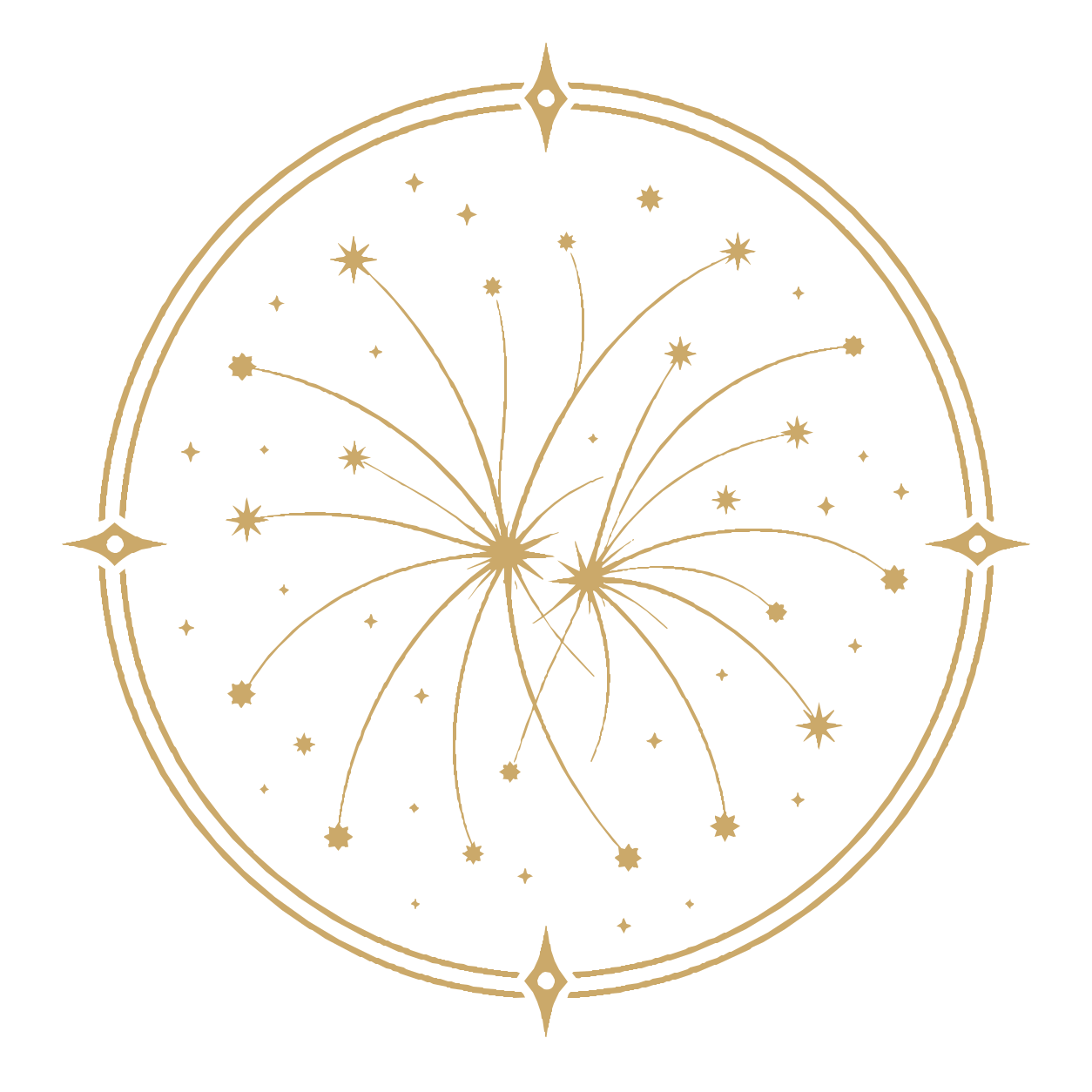
The mark is the radiant
Every Perseid appears to come from one point in the sky — the radiant. Trace any of them backwards and they meet there. The logo is that: fine lines spreading outward from a single origin to many destinations. One couple, many guests.
Who makes it
Perseid is built by Kosmic Edge Marketing. You buy Perseid; Kosmic Edge is who you pay, and whose name is on the invoice and on the messages your guests receive.
That last part matters more than it sounds. Because messages go out under our registered sender identity, the compliance obligation is ours — which is why we will not text a number that its owner did not enter themselves, no matter who asks. It is not a setting, and it is the reason messages from Perseid still arrive.